
What Is Suricode? A Practical Approach to Safer AI-Assisted Coding
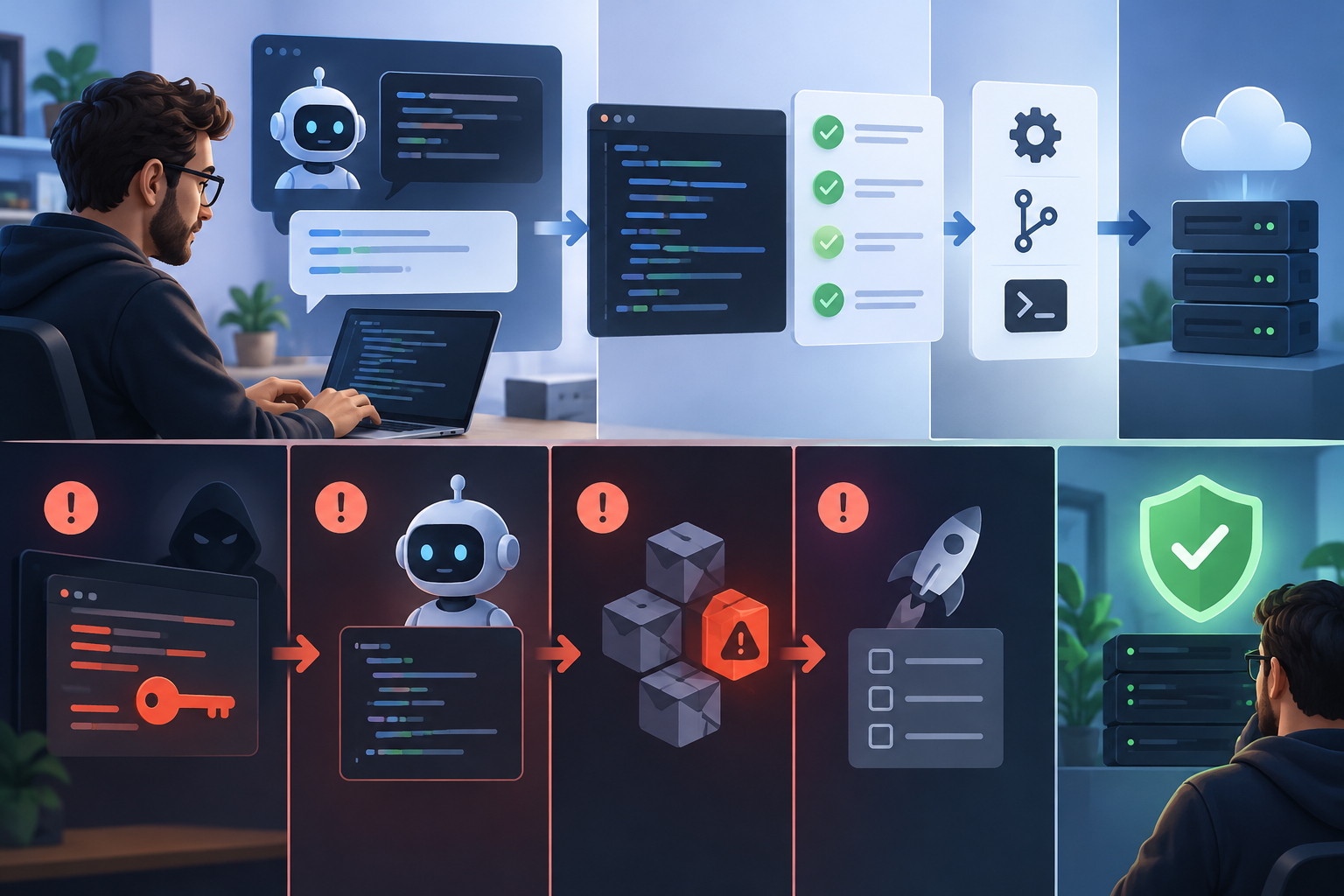
What Is Suricode?
Suricode is a resource for developers using AI coding tools. Its focus is practical: help you get value from AI-assisted development while treating code security as part of the workflow, not as a final check.
AI coding tools can help generate code, explain unfamiliar files, suggest fixes, and speed up repetitive work. They do not remove the need for engineering judgment. Developers still need to understand what is being generated, check how it behaves, and validate it before relying on it in an application.
How Suricode fits into an AI coding workflow
A responsible workflow treats an AI coding tool as an assistant rather than an authority:
- Describe the task clearly. Give the tool enough context to produce a useful suggestion, but avoid sharing sensitive information.
- Review the generated output. Read the code as you would code written by another developer. Check its assumptions, error handling, permissions, and data flows.
- Check dependencies and configuration. Generated code may introduce packages, configuration changes, or services that need their own security review.
- Test the result. Run the relevant tests and add cases for invalid input, authentication, authorization, and failure conditions.
- Validate before deployment. Confirm that the application behaves as expected in the target environment and that secrets and security settings are configured safely.
Suricode's role is to encourage this kind of careful, repeatable process when developers use AI coding tools. The goal is not to avoid AI-generated code. The goal is to make sure generated code is reviewed and validated before it becomes part of a production system.
Common security pitfalls
Exposing secrets to an AI tool
Developers may paste API keys, passwords, access tokens, connection strings, private certificates, or other confidential data into a prompt to provide more context. This can expose secrets unnecessarily and make them harder to control.
Use placeholders and representative examples instead. Remove credentials from code before sharing it with an AI tool, and keep secrets in the appropriate secret-management or environment-configuration system. If a secret is exposed, treat it as compromised and follow the process for rotating or revoking it.
Trusting unreviewed output
AI-generated code can look convincing while still containing insecure assumptions. It may mishandle input, use weak defaults, expose sensitive information in errors, or implement authorization incorrectly.
Review generated code line by line where security matters. Ask what inputs it trusts, who is allowed to perform each operation, what data it returns, and how it behaves when something fails. Tests are useful, but passing tests do not replace review of the underlying behavior.
Skipping dependency checks
An AI tool may suggest a package or add an import without explaining the package's maintenance status, licensing, known vulnerabilities, or permissions. Adding dependencies without checking them increases the application's attack surface and maintenance burden.
Before adopting a suggested dependency, check whether it is necessary and whether an existing dependency already provides the required capability. Review its source, version, advisories, and update path according to your project's normal dependency process. Keep dependency checks in place after the initial installation as well.
Deploying without validation
Moving AI-generated code directly into a deployment pipeline is risky when the code has not been tested in the environment where it will run. Differences in configuration, permissions, data, and external services can reveal problems that were not visible during development.
Validate changes before deployment. Run automated tests, inspect the final configuration, verify that secrets are supplied through the intended mechanism, and check authentication and authorization behavior. Where possible, deploy through the same review and release process used for other code.
A safer default
AI coding tools are most useful when they shorten implementation work without shortening the review process. Keep sensitive information out of prompts, treat generated code as untrusted until reviewed, check every new dependency, and validate changes before deployment.
That is the practical security habit Suricode promotes: use AI to help write code, but keep responsibility for the code with the developer and the team that ships it.